

26 February 2026, 4:25 AM
Day 3 | Into Moab, the Off-Road Mecca
Where rock and earth test the true spirit of the Land Cruiser
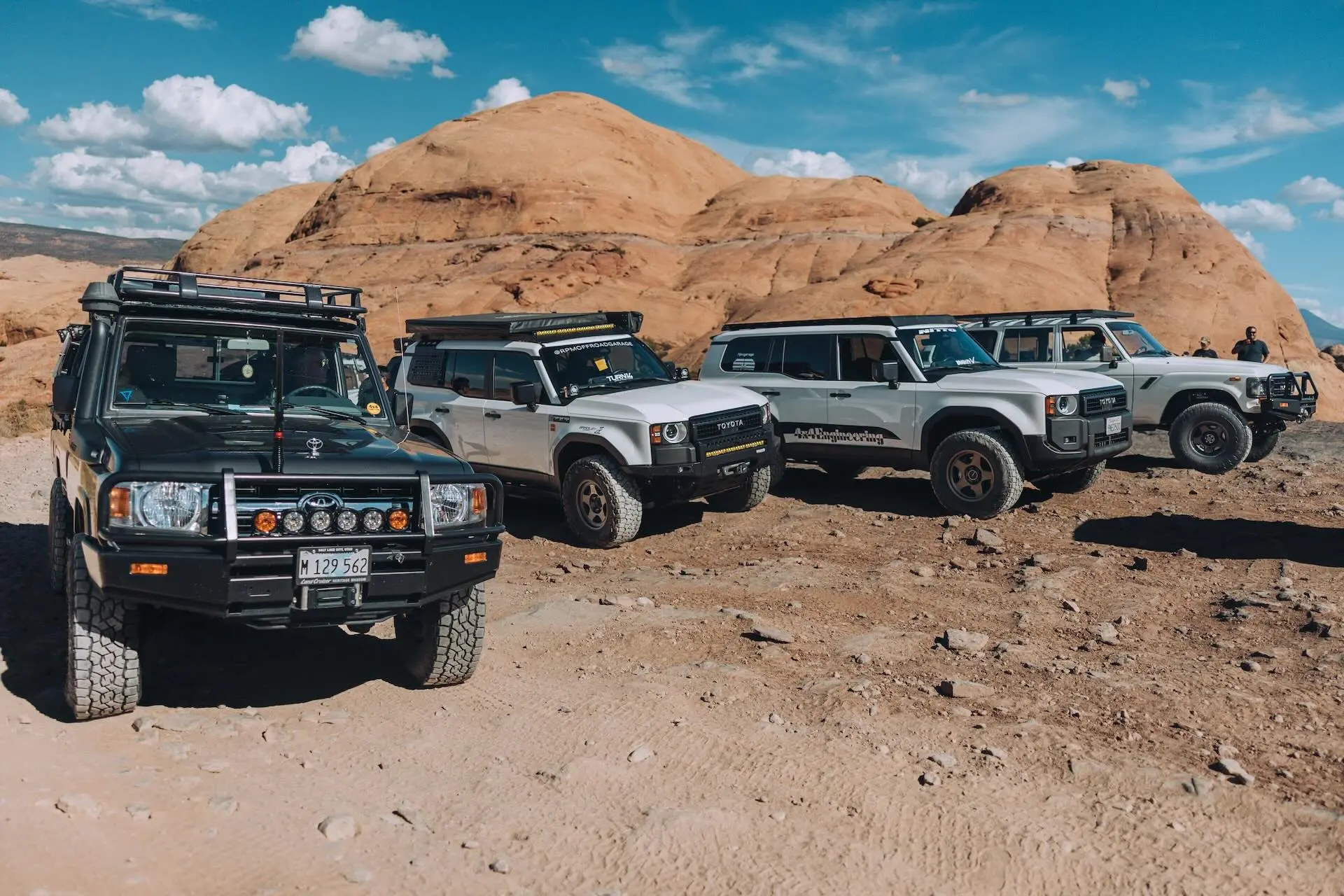
It’s the third day of our journey.
At 9 a.m., we gathered at our hotel in Salt Lake City, ready to set out for Moab—known to many as the mecca of off-roading.
For Sadayoshi Koyari, this was a particularly special day.
Moab is one of America’s most renowned off-road destinations, famous for its striking red sandstone cliffs and massive rock formations carved over tens of millions of years. Koyari describes it as “a place with about a hundred Ulurus (Ayers Rocks)” capturing the sheer, otherworldly scale of the landscape. It’s a place that, in many ways, stands as a symbol of American off-road culture.
Surprisingly, this was Koyari’s first time truly driving in Moab.
During his years as a Land Cruiser developer, he had avoided using this region for testing. The reason? Moab draws many visitors, increasing the risk of having unreleased vehicles spotted by outsiders. But this time, there was no reason to hold back—he was finally here.
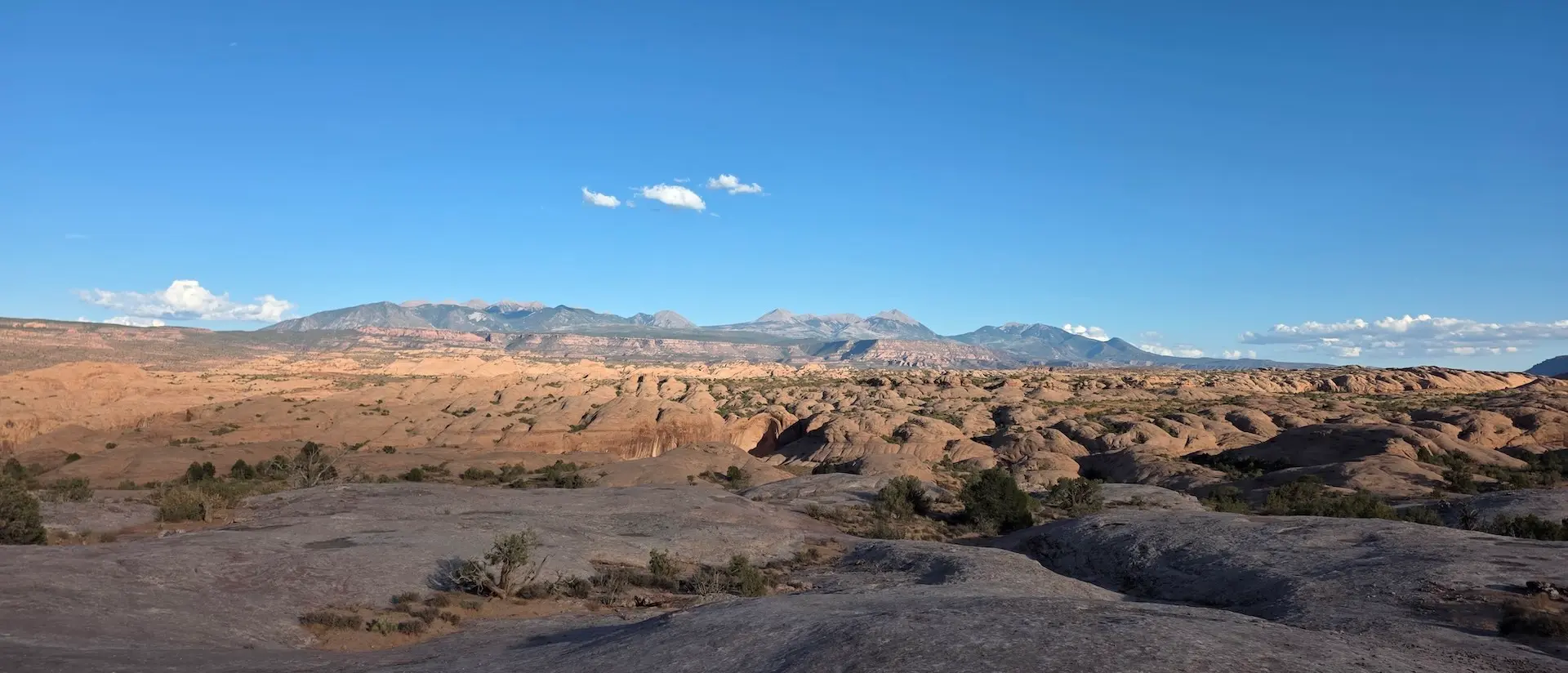
Heading to Moab with Trusted Friends
We traveled in vehicles driven by trusted local partners.
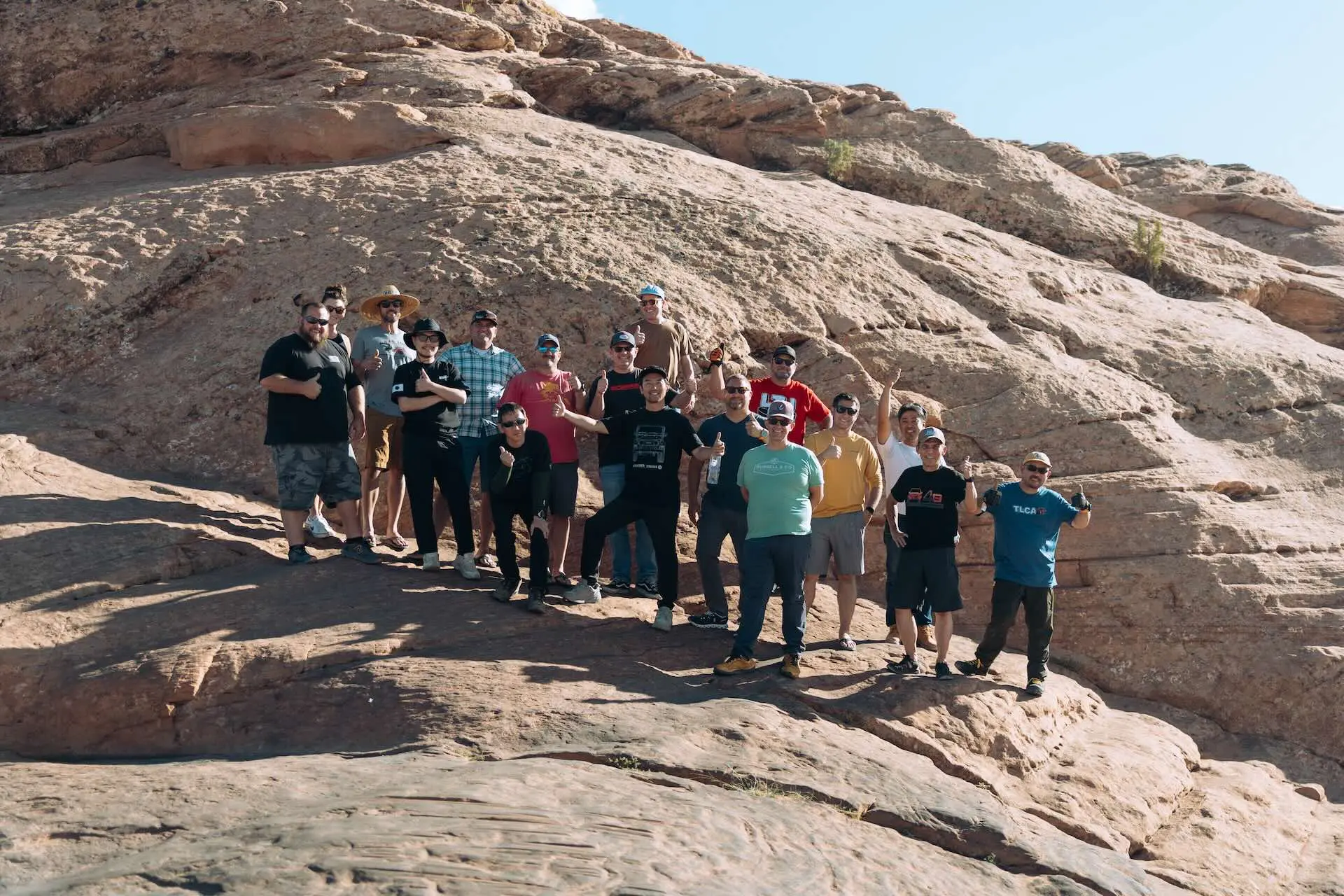
Alongside us were long-time friends from Canguro Racing, with whom Koyari had worked for over a decade, including at events like the Baja 1000. Joining them were members from Proffitt’s Land Cruisers, a leading Land Cruiser restoration shop in North America led by its owner, Jeremiah. The team from 4X4 Engineering was also part of the convoy—a truly strong lineup for the adventure ahead.
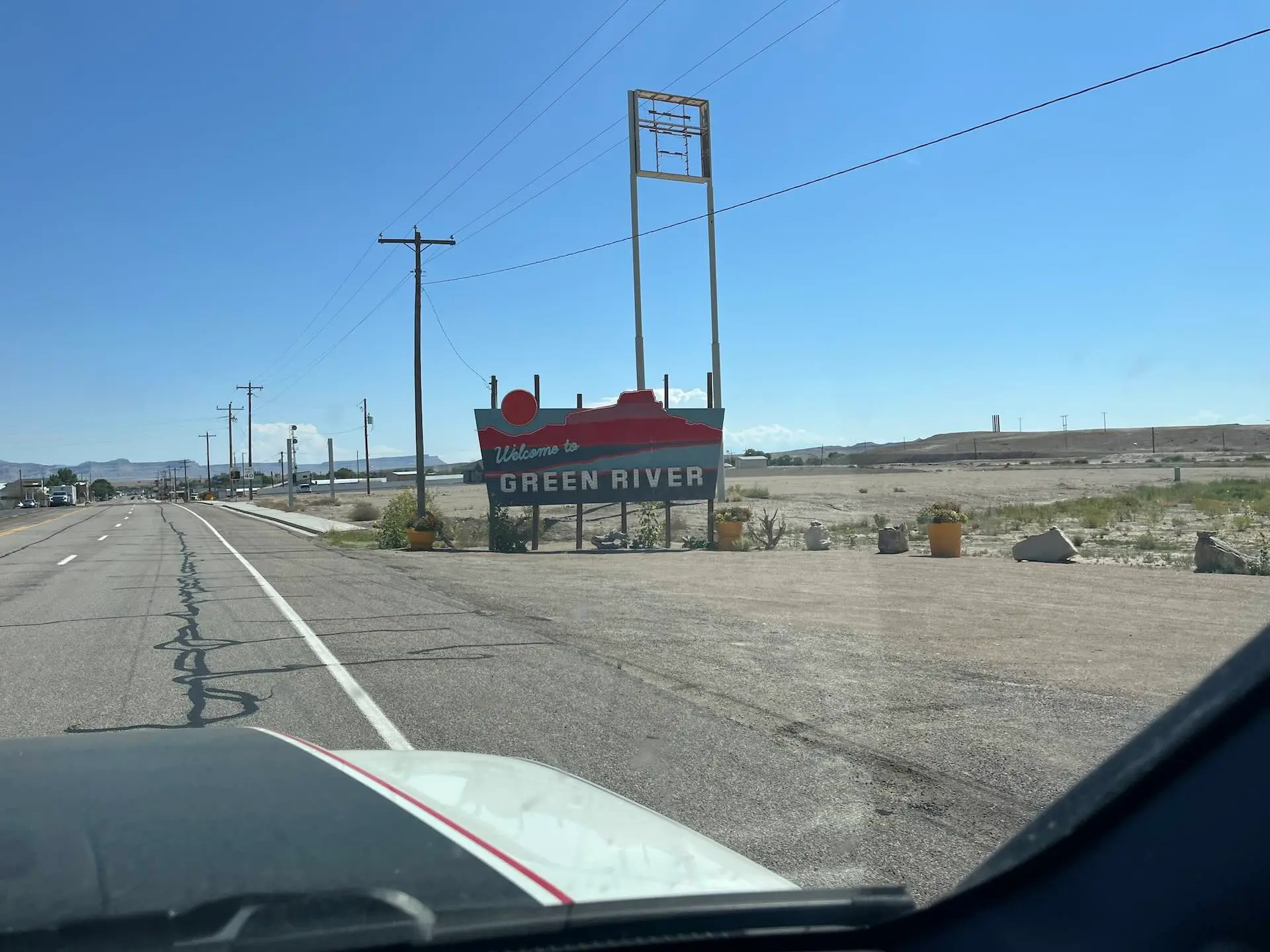
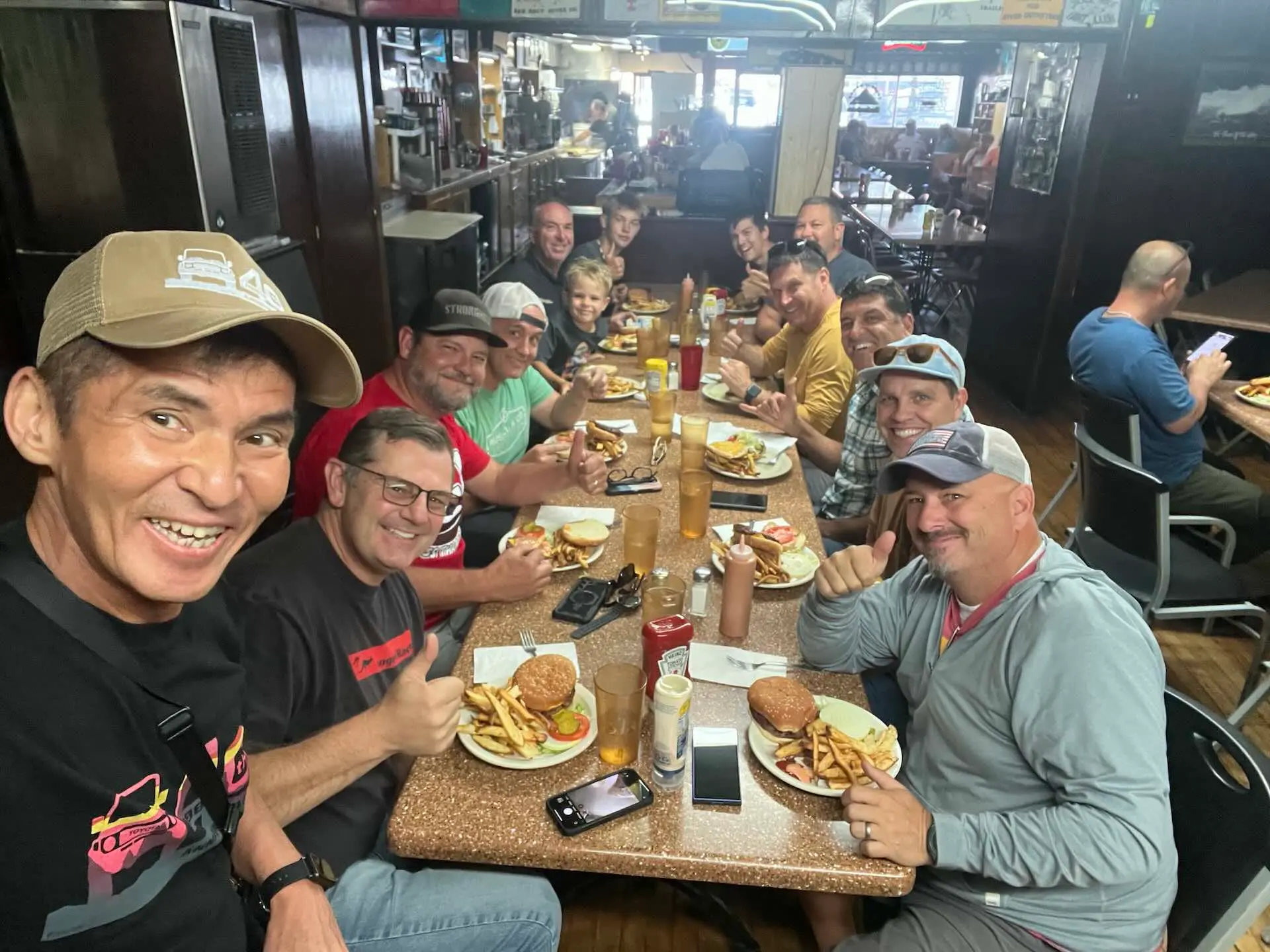
Around midday, we stopped in the small town of Green River for lunch. Burgers were the choice of the day—fuel for what lay ahead on the rugged trails.
Taking on Hell’s Revenge
After lunch, we finally rolled into Moab.
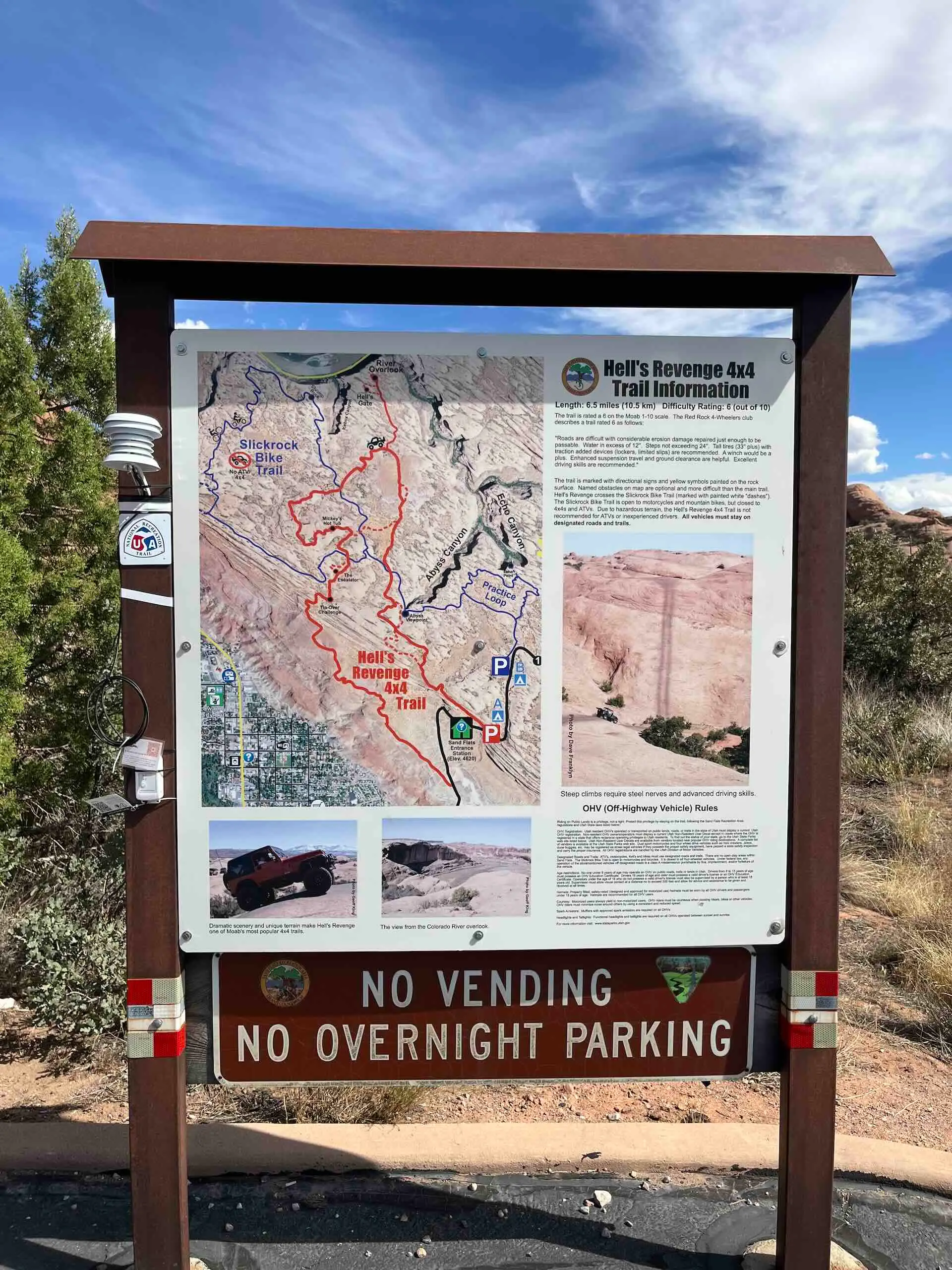
Our first destination: the legendary Hell’s Revenge trail.
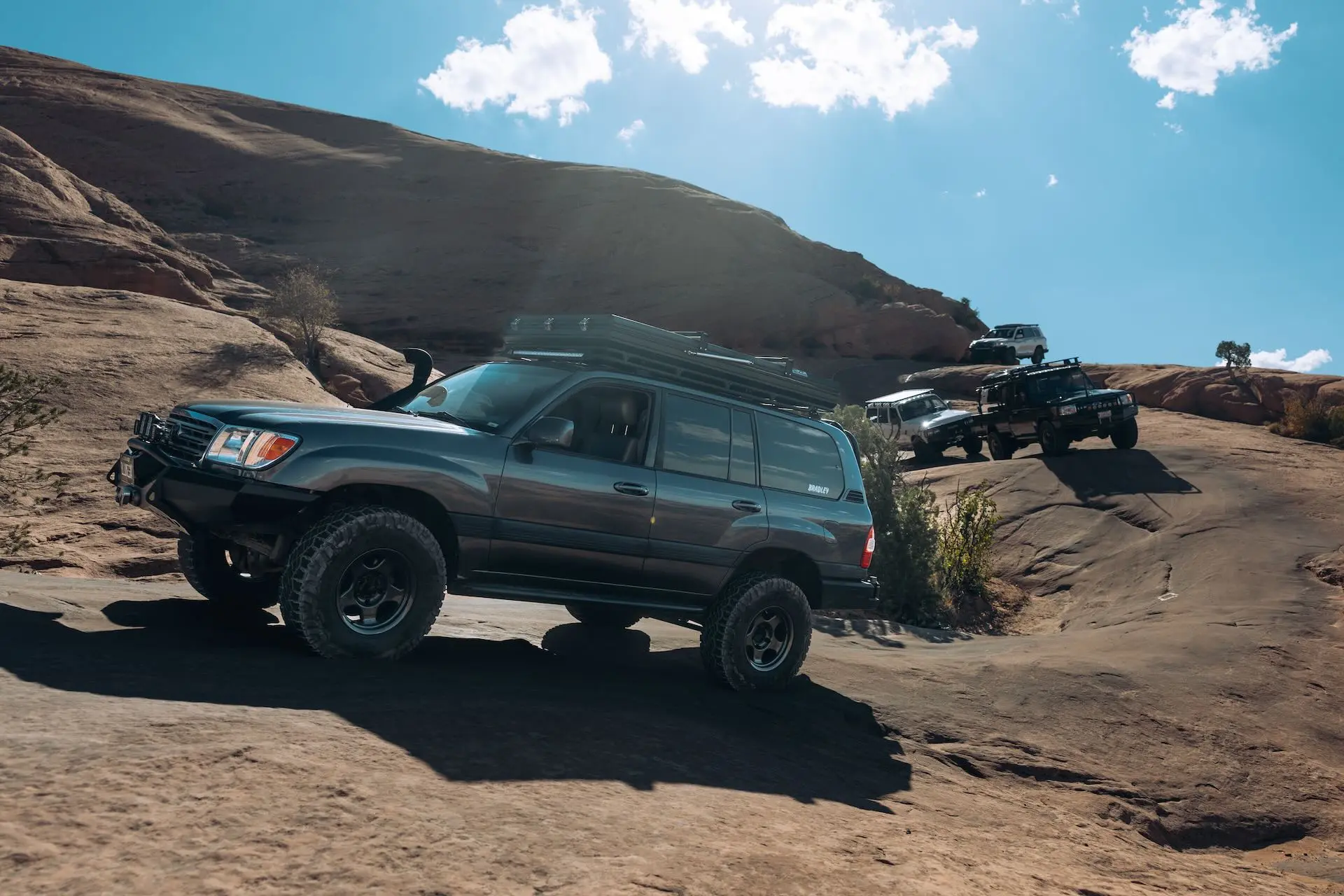
This trail is famous even among seasoned ATV riders, known for its long, steep rock climbs that have you powering straight up smooth sandstone slabs.
We passed through the entry gate, pulled into the parking area, and dropped tire pressure for off-road readiness. While we prepared, a steady stream of rental ATVs rumbled past, a clear sign of the trail’s popularity.
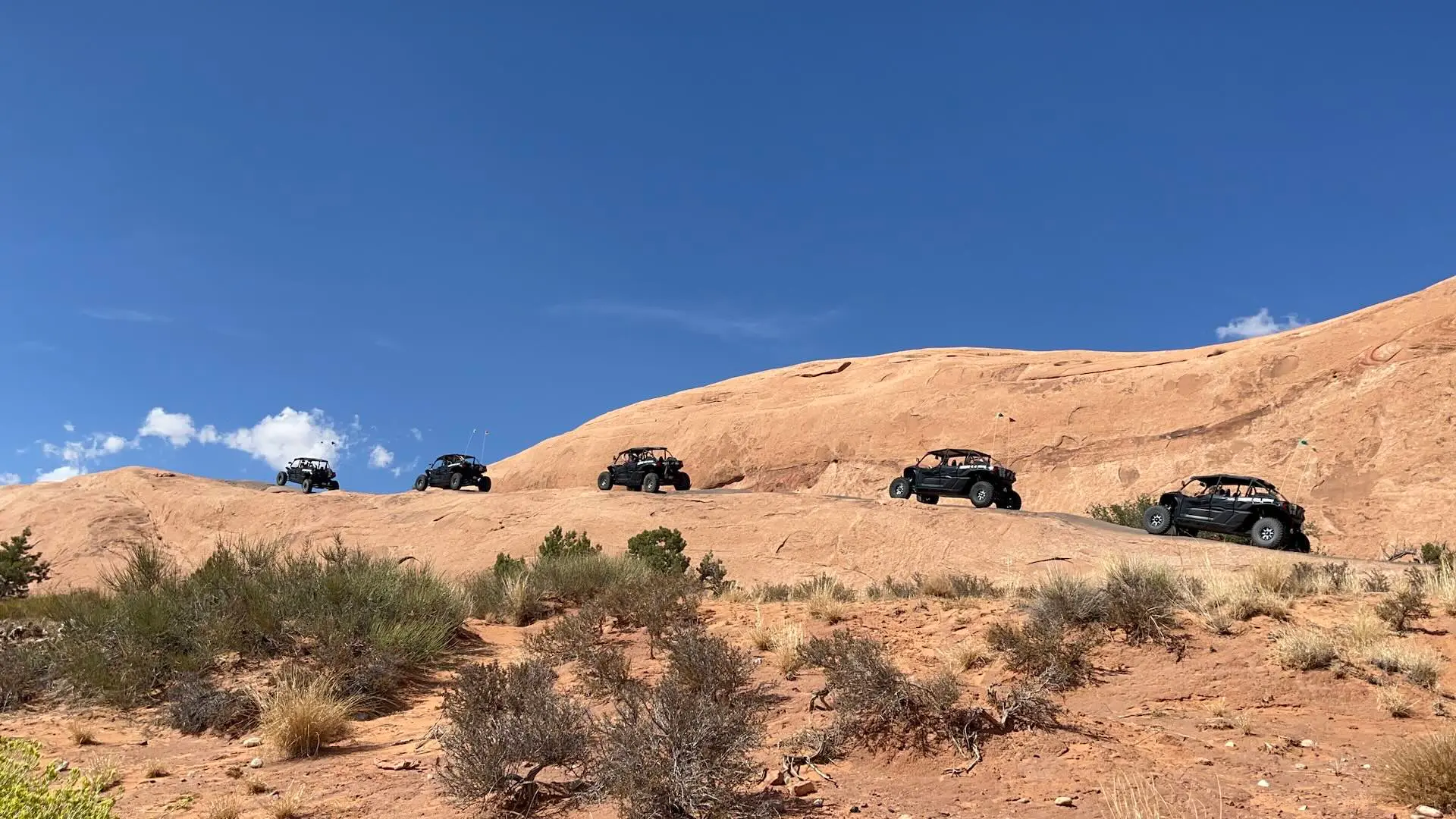
Right from the start, we were greeted by steep rock faces.
On either side, sheer drops—with no fences, no guardrails. One mistake here and you’d face devastating consequences. This was a true “at-your-own-risk” world.
Along the route, we crossed paths with many off-road vehicles and ATVs. Men, women, young, and old alike navigated the challenge with big smiles, exchanging cheerful greetings as they passed. It was clear—the off-road lifestyle wasn’t just a hobby here; it was part of the local culture.
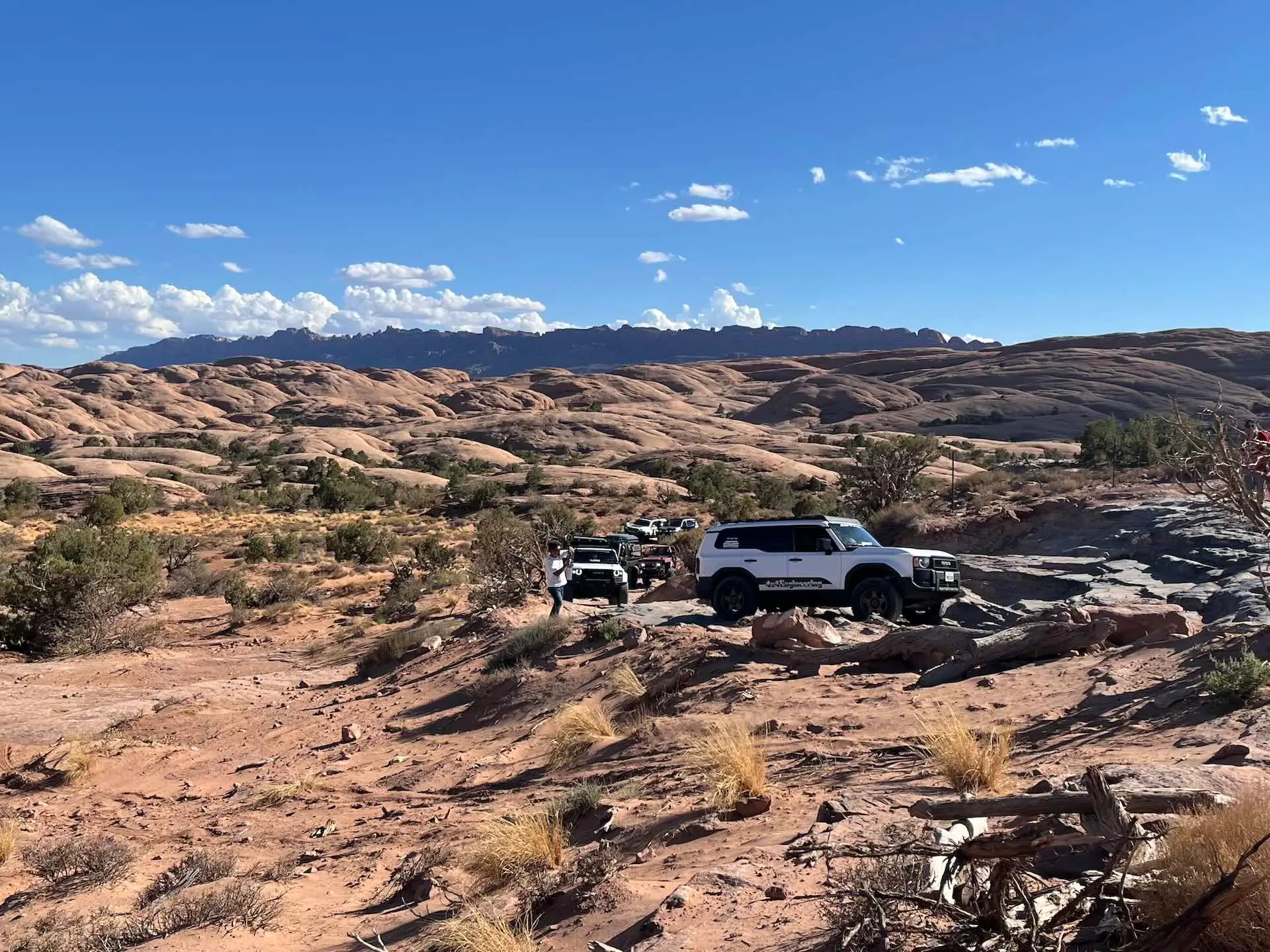
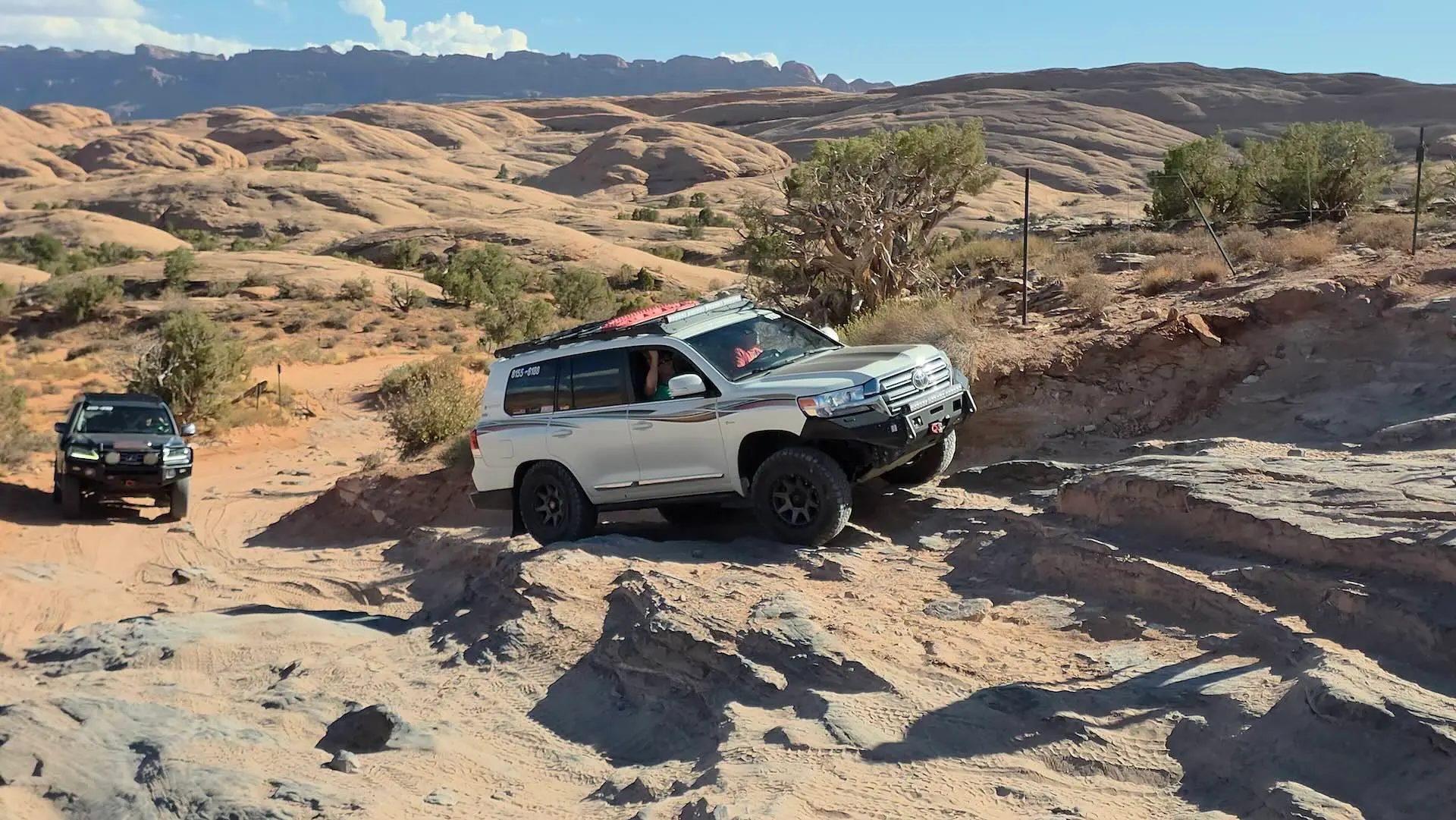
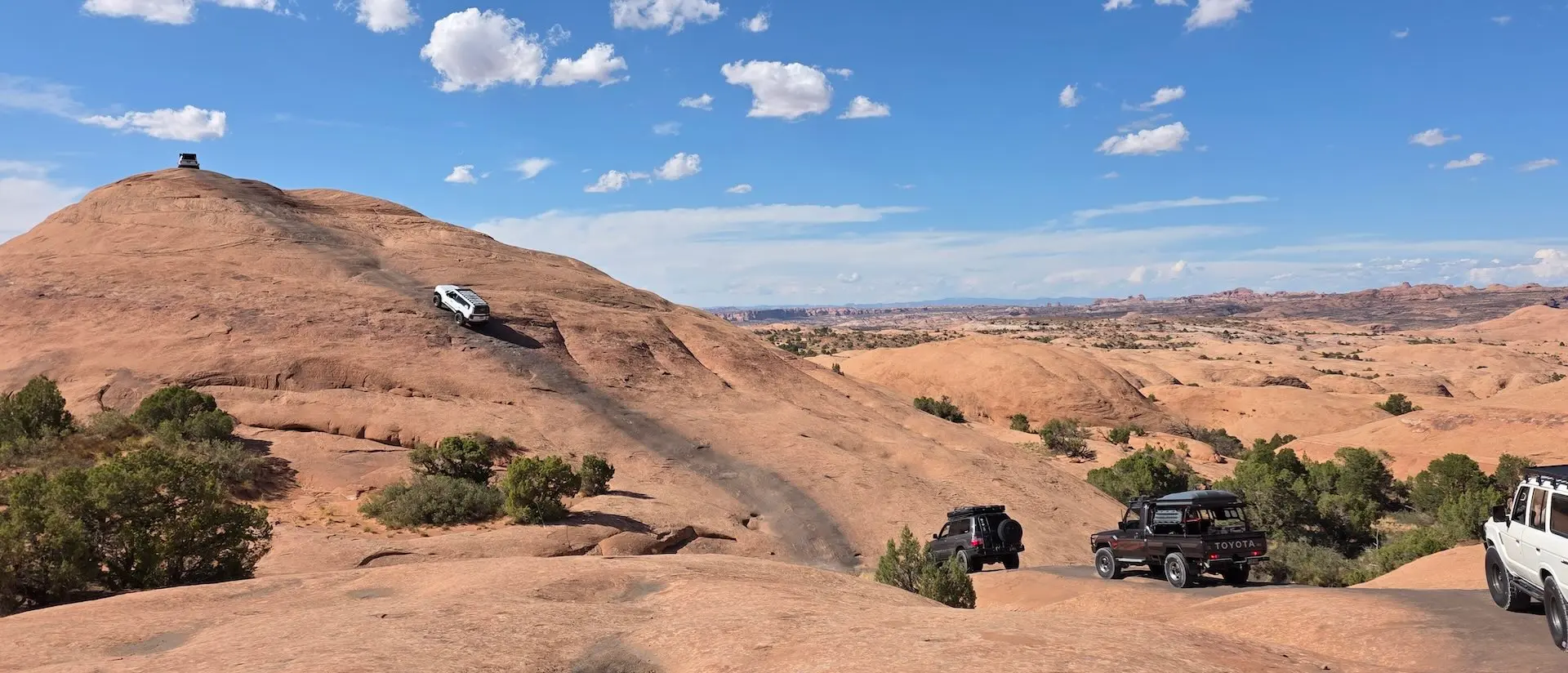
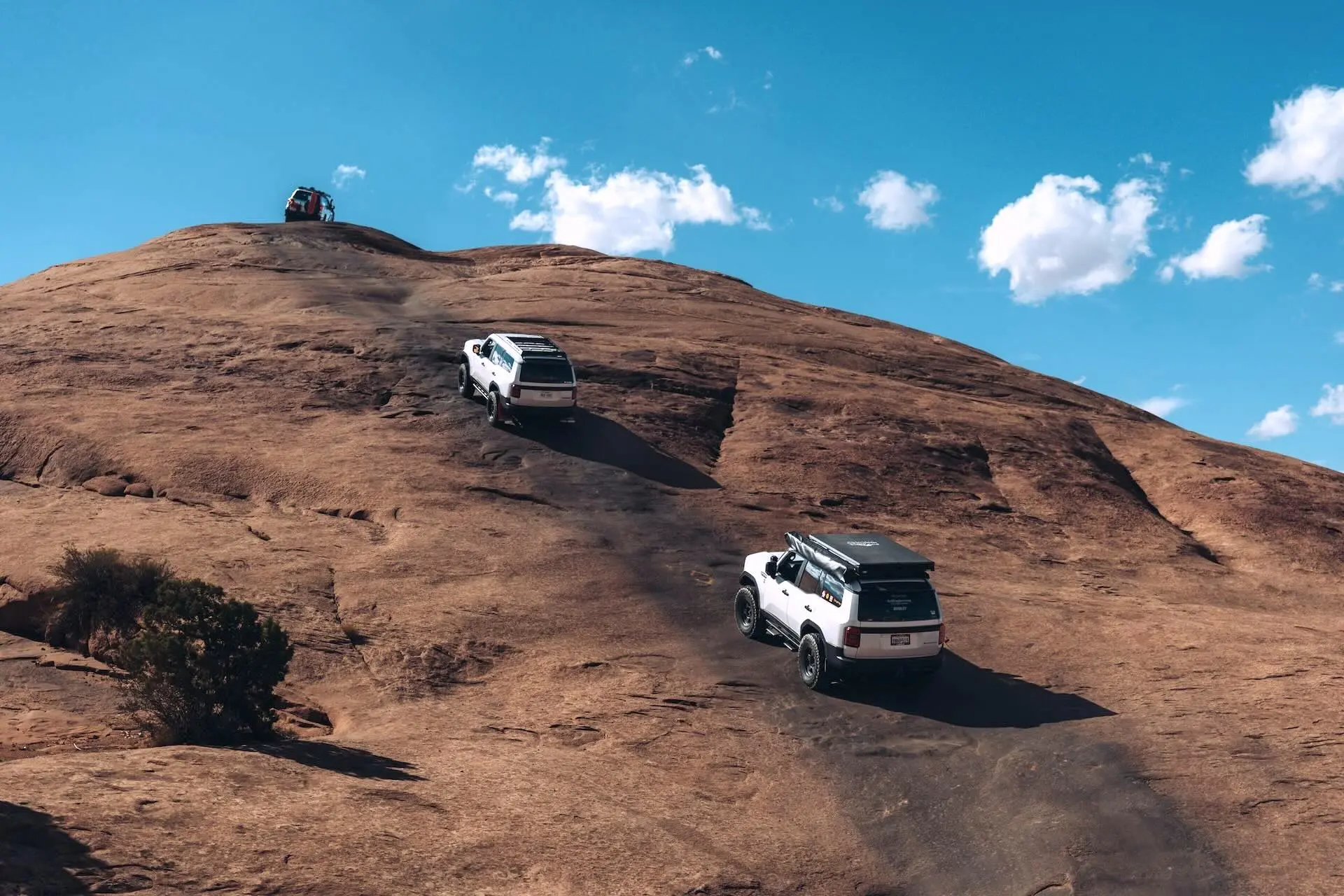
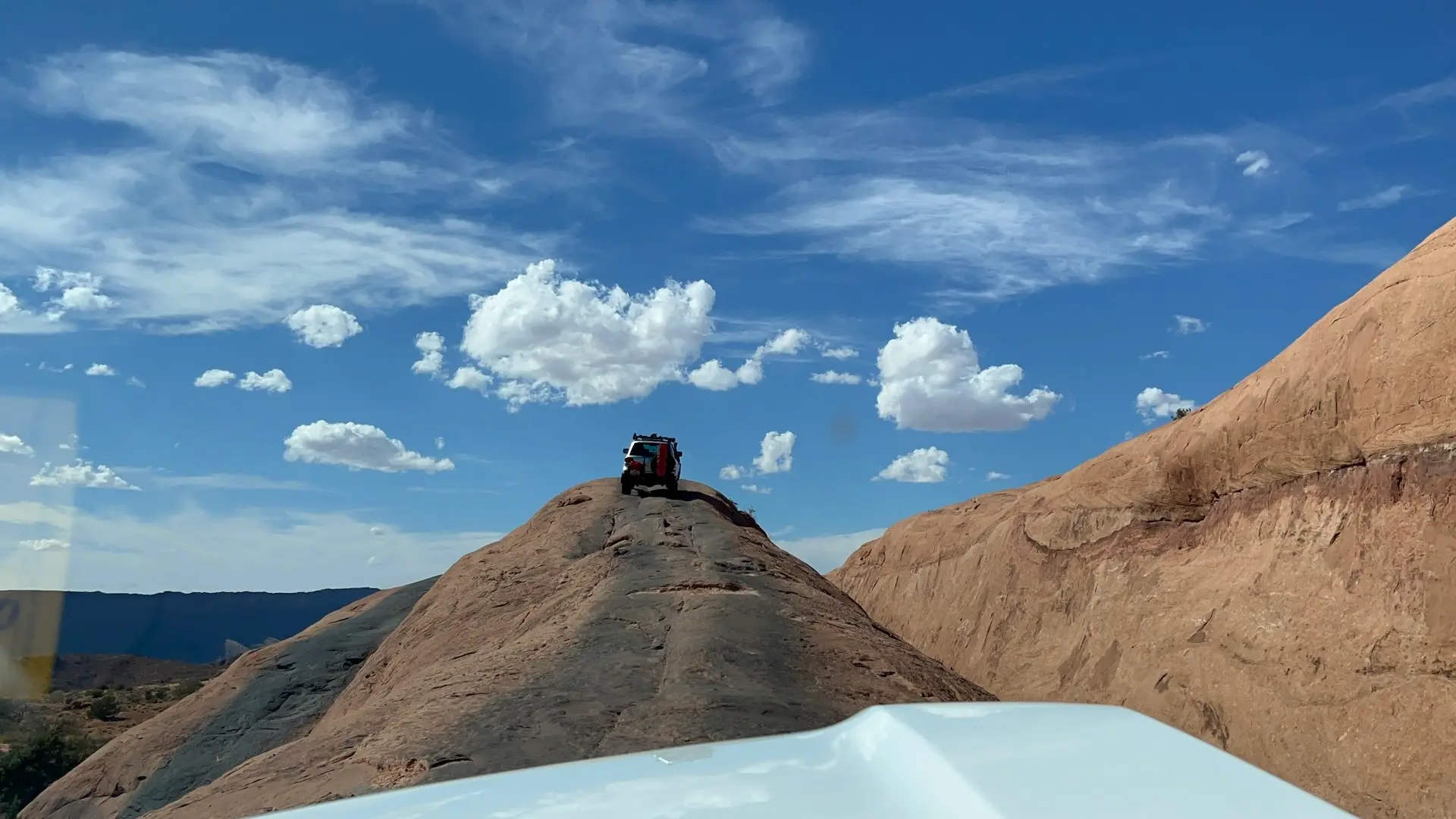
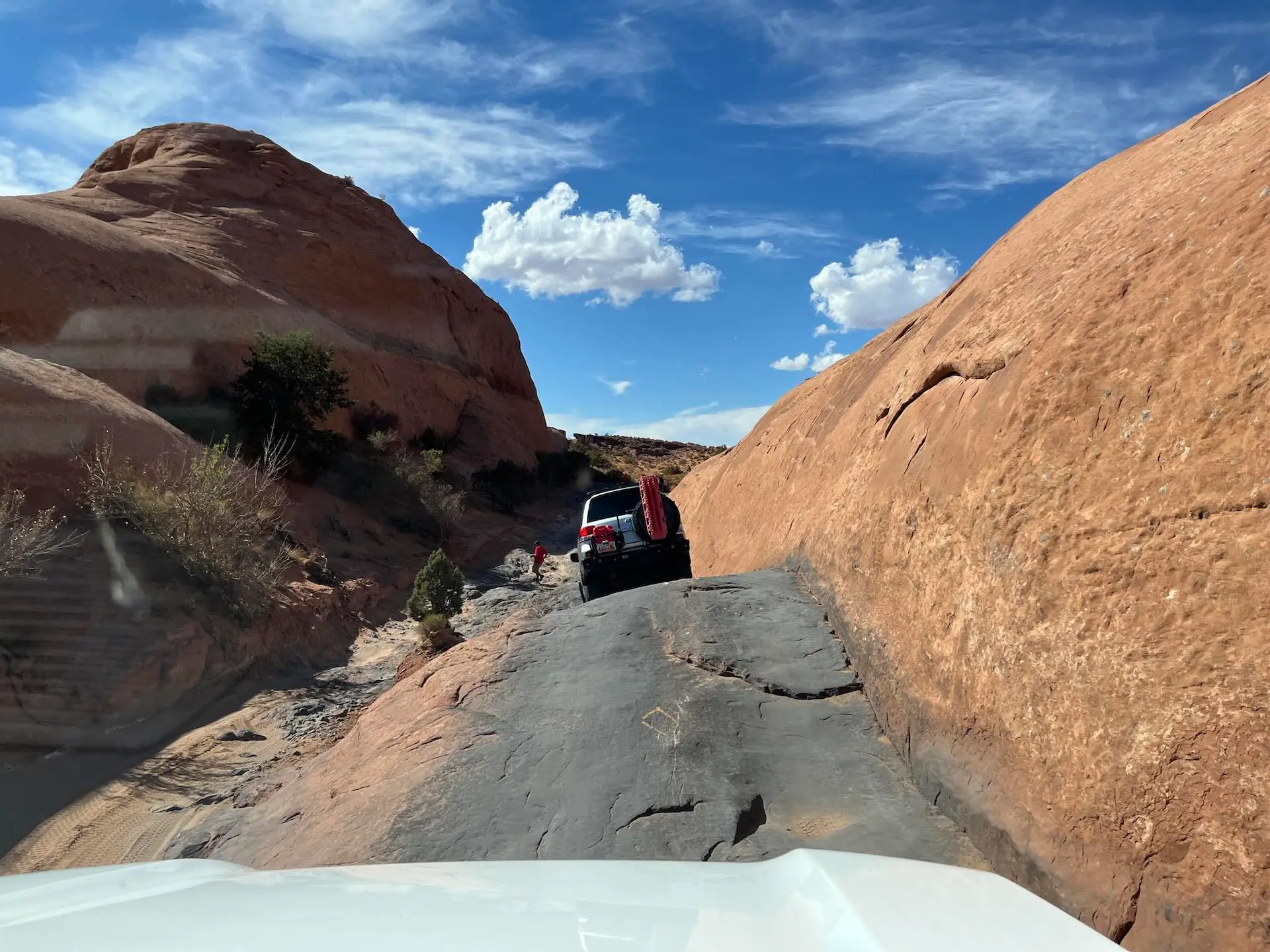
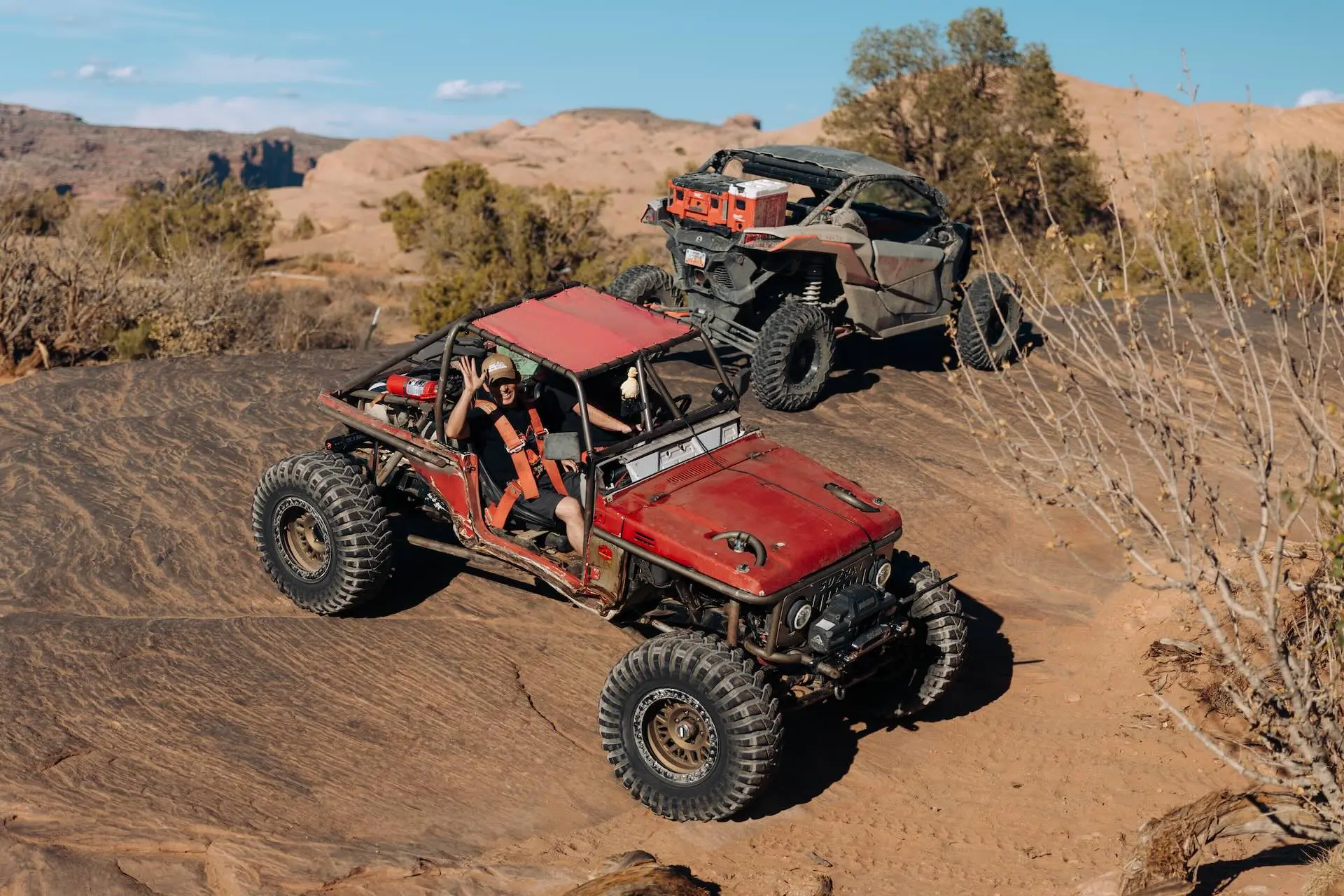
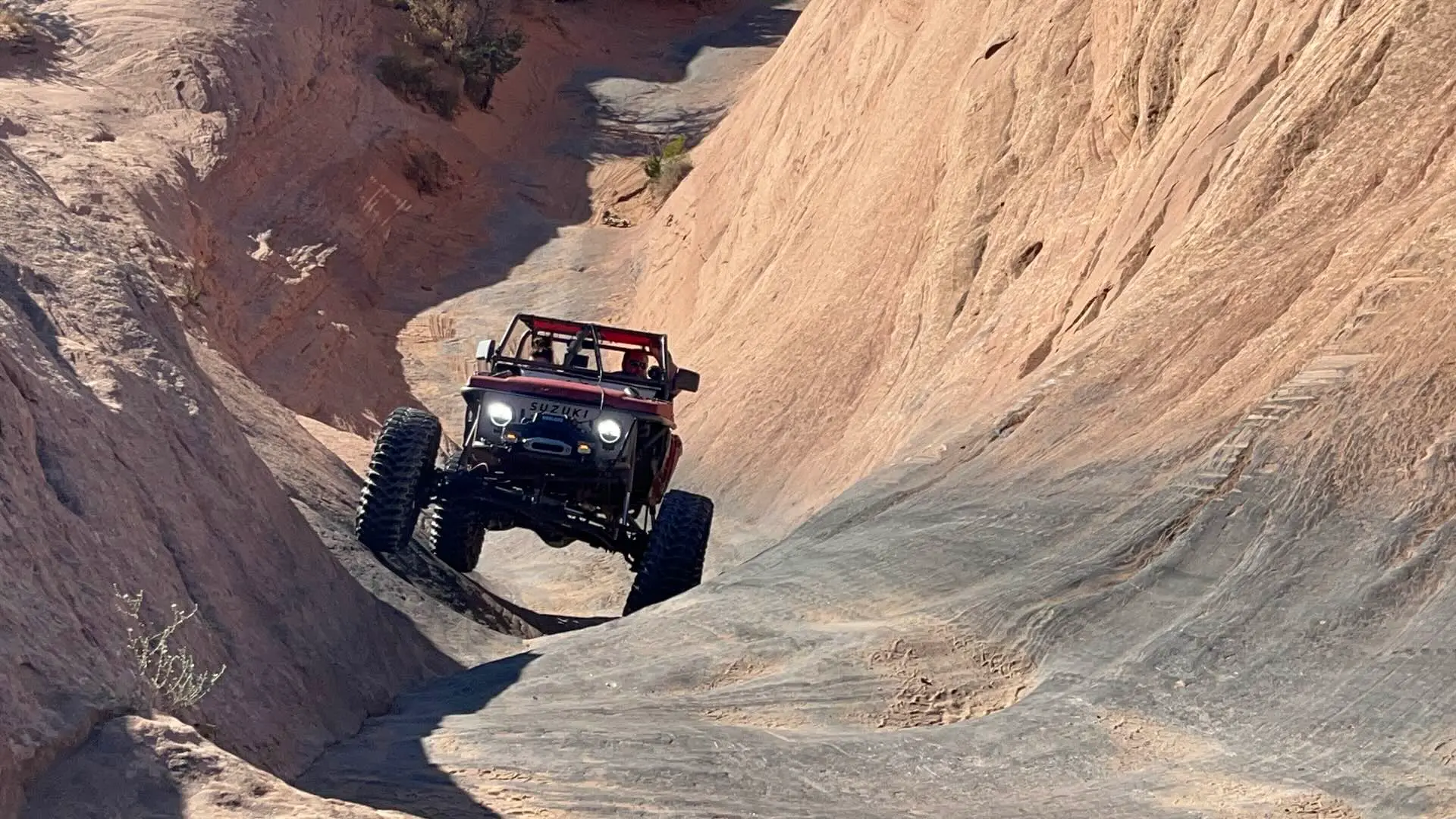
At one point, Koyari hopped into a Suzuki Jimny for a run through one of the most technical sections. Surrounded by massive rock formations, it was a scale that simply doesn’t exist in Japan. With the horizon filled with jagged red rock and endless sky, he later summed it up in just one word: “Magnificent.”
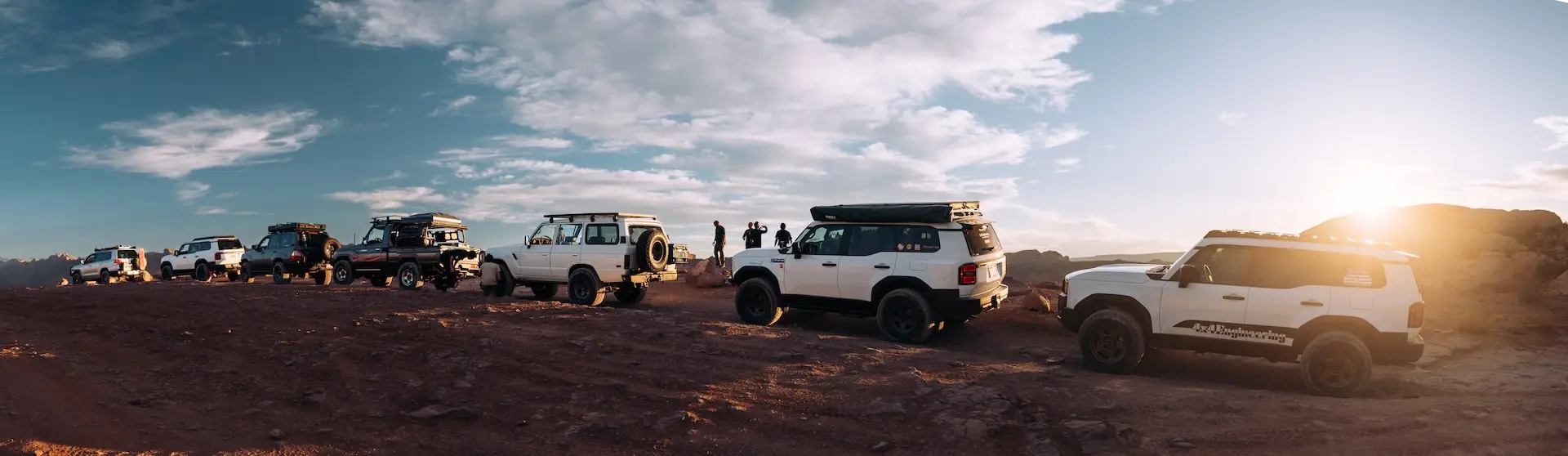
A Night Surrounded by Moab’s Wilderness
After the drive, we returned to town for dinner at an Italian restaurant. Around the table, conversation flowed—stories from the day’s trail sparking laughter and excitement.
Later, we headed back toward the Hell’s Revenge area—but this time for camping. Not in a public campground, but in a hidden spot only the locals knew—the kind of place no one else comes to.
We unrolled our mats directly onto the ground and slept cowboy-style under the open sky.
That night was a full moon, casting extra light over the desert landscape. We gathered around a campfire, deep in endless conversations about Land Cruisers.
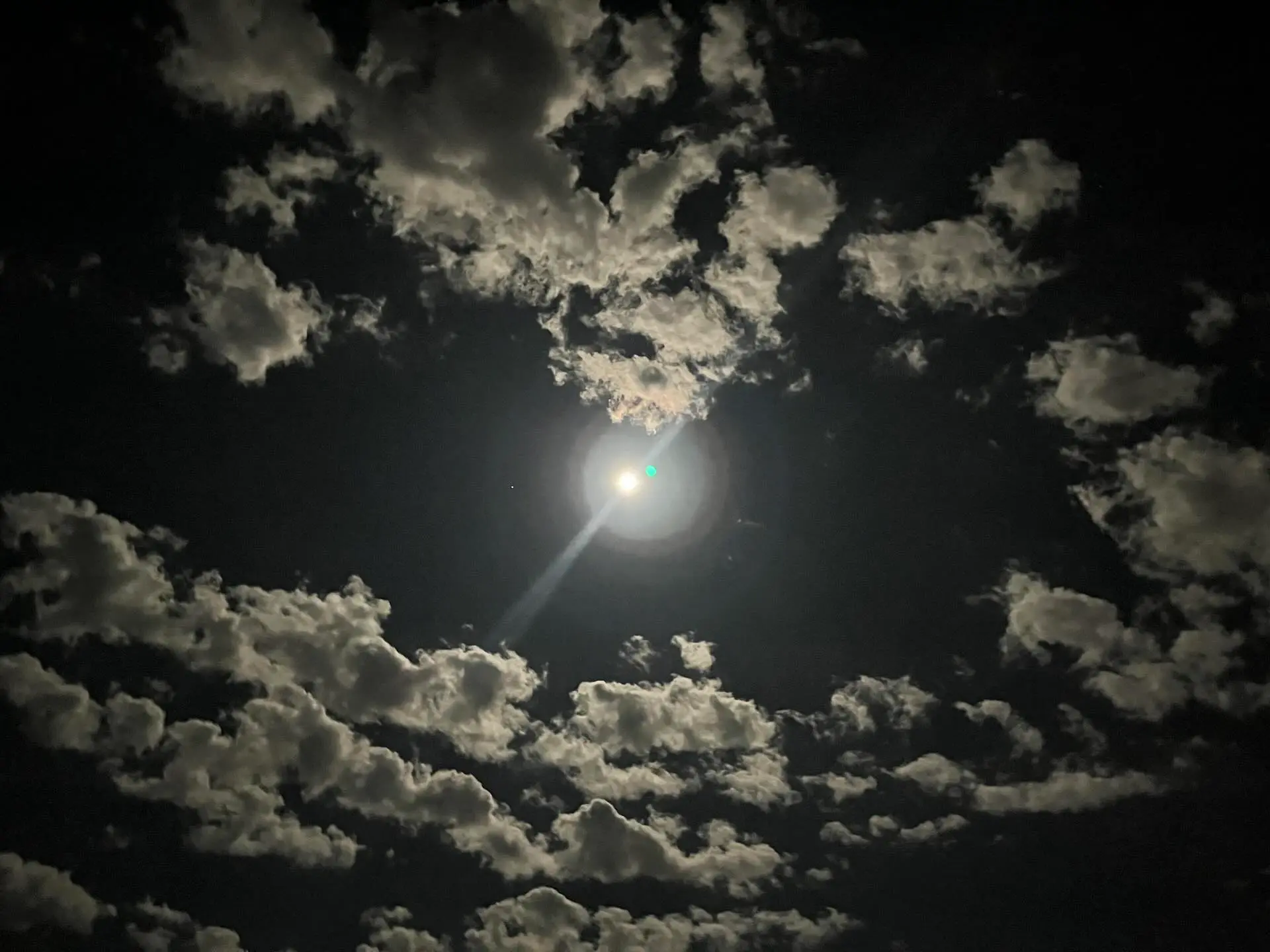
Under a sky blazing with stars, in the quiet of the desert, time slowed to the rhythm of the wilderness. This wasn’t just a trip—it was a glimpse into the lifestyle of the American Land Cruiser community.
Away from the usual tourist spots, we experienced Moab’s raw beauty and the Land Cruiser’s raw ability—side by side with seasoned local experts.
Day 3 was a reminder of what the Land Cruiser truly embodies: not just performance, but a way of life.
Next time, we’ll explore more Moab trails—and see what lies beyond.